Copy Trading Forex: What to Check Before You Follow a Strategy
A realistic guide to forex copy trading, including performance checks, broker setup, drawdown, allocation size, and when not to copy.
Copy trading can be useful when you want exposure to a strategy without placing every trade yourself. It can also be dangerous when it turns into blind trust. You are still taking market risk, execution risk, broker risk, and human decision risk, even if someone else is making the entries.
The right way to approach copy trading is not to ask, "Which strategy makes the most?" Start with, "What am I copying, what could go wrong, and how much can I afford to lose if the strategy has a bad period?"
Quick Answer
Before following a forex copy trading strategy, check the live performance record, maximum drawdown, instruments traded, broker conditions, account size, position sizing method, and how losses are handled. Start smaller than the maximum you could allocate, review results over time, and avoid any strategy that promises fixed profits or hides risk.
What Copy Trading Does
Copy trading links your account to another trader or strategy so trades are mirrored automatically or semi-automatically. The copied trades may be scaled to your account size, fixed lot size, or allocation setting depending on the platform and broker.
That convenience is the main appeal. You do not have to sit in front of the chart all day. But convenience can also create distance from risk. A copied position is still your position. If it loses, the loss happens in your account.
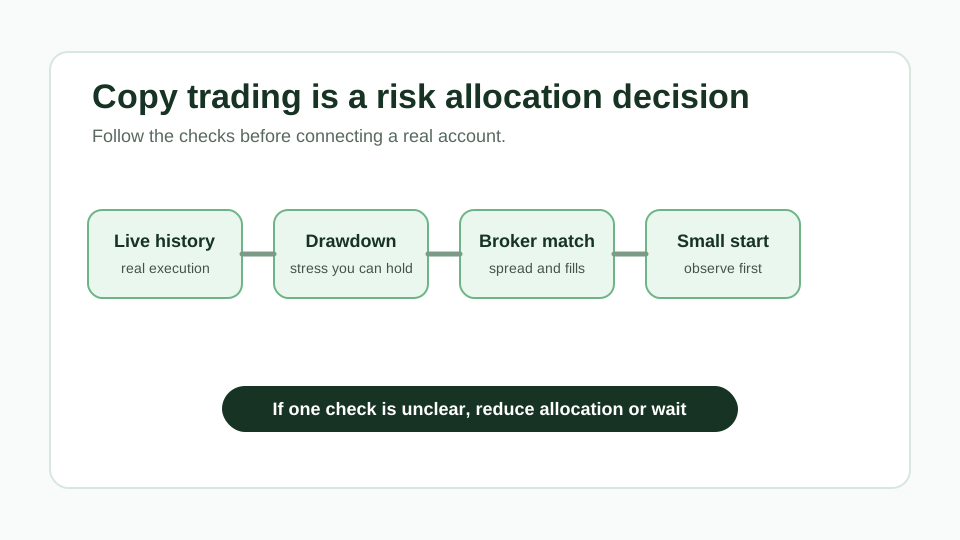
Copy trading is therefore closer to risk allocation than passive income. You are deciding how much of your account should be exposed to a method, a broker setup, an instrument mix, and a trader's future decisions.
What to Check First
Use this order before connecting:
| Check | Useful question | Why it matters |
|---|---|---|
| Live history | Has the account traded through more than one market condition? | Short smooth history can hide future stress |
| Drawdown | What was the worst peak-to-trough loss? | Shows the emotional and capital stress you may face |
| Instruments | Does it trade EURUSD, GBPUSD, XAUUSD, or several markets? | Instruments behave differently and may need different account size |
| Broker setup | Is my broker/account type the same or close? | Spread, commission, and fills can change copied results |
| Open exposure | Are there floating losses or baskets still open? | Closed wins alone can hide the real risk |
| Allocation size | What loss would the old drawdown create on my account? | A good strategy can still be too large for your balance |
| Stop rules | Is there a hard stop, equity stop, or manual intervention rule? | Loss handling matters more than the best month |
| Fees and swaps | Are commissions, spreads, and overnight costs visible? | Costs reduce returns and can widen drawdown |
Do not skip the boring checks. They are where most of the useful information lives.
Drawdown Is the Test of Commitment
Many people choose a strategy after looking at profit and disconnect after looking at drawdown. That is backwards. You should decide whether the drawdown is acceptable before copying.
If a strategy has previously drawn down 15 percent, ask whether you could sit through a similar or worse period. If the honest answer is no, reduce the allocation or choose a lower-risk strategy. There is no shame in choosing a slower strategy if it helps you follow the plan consistently.
Here is a simple way to translate drawdown into money:
| Account allocated | Previous strategy drawdown | Approximate account decline | Practical read |
|---|---|---|---|
| $500 | 15% | $75 | Small enough for observation if the money is truly risk capital |
| $2,000 | 15% | $300 | More meaningful; write the limit before connecting |
| $5,000 | 15% | $750 | Many traders overestimate their comfort at this size |
| $10,000 | 15% | $1,500 | Needs a clear plan for whether to hold, reduce, or stop |
The next drawdown can be larger than the previous one. Use the table as a planning habit, not a forecast.
Broker Conditions Can Change the Result
The copied provider and your account may not receive identical fills. Differences can come from spread, commission, execution speed, minimum lot size, slippage, symbol suffixes, and broker liquidity. These differences matter more for scalping, gold, and strategies with tight exits.
Before connecting, review the broker requirement and account type. Then check your platform during the hours the strategy usually trades. If the strategy depends on tight spreads but your broker is wider, results can diverge.
For strategy research, compare broker context on the brokers page and use the forex lot size calculator to translate a possible loss into account money before you allocate.
When Not to Copy
Do not copy a strategy if:
- You cannot explain the basic method.
- The provider promises fixed income or guaranteed returns.
- The history is too short for the risk being advertised.
- Drawdown is hidden or unclear.
- The strategy holds large losses while closing small wins.
- You would panic if the account fell 10 percent.
- The broker setup feels rushed or poorly explained.
- You need fast profit to solve a personal cash problem.
Not copying is a valid decision. Waiting for more history is also a valid decision.
How to Start Small
If you decide to follow a strategy, start with an allocation that lets you observe without emotional pressure. The first objective is not to maximize return. It is to see whether the real experience matches the performance page: timing, drawdown, open trades, swaps, and execution.
After a few weeks, review the results. Did trades copy correctly? Did costs match expectations? Did you feel comfortable during losses? If not, increasing allocation will not fix the problem.
A practical first month review can be simple:
| Review item | What to write down |
|---|---|
| Copy accuracy | Did each provider trade appear in your account? |
| Fill difference | Was your entry or exit worse than the provider account? |
| Spread and commission | Were trading costs close to what you expected? |
| Drawdown feeling | Did you want to close the strategy during normal losses? |
| Open trades | Were losses visible or hidden behind closed winning trades? |
| Rule fit | Did the strategy behave the way the page said it would? |
How TestedSignals Fits In
TestedSignals is built around comparing strategies, broker setup, and live performance context before connecting. You can start from the strategies page and review the risk disclaimer before deciding whether any strategy fits your account.
Strategies such as EURUSD VT Markets, TMGM Gold Buy + Chill DCB, and Gold Grid Startrader are not interchangeable. They differ by instrument, style, broker, and risk level. Compare them as different risk profiles, not as a leaderboard.
A Better Decision Process
A simple process can prevent rushed choices:
- Learn the basics of pips, lots, leverage, and drawdown.
- Choose the type of market exposure you want.
- Review live performance and broker conditions.
- Decide a maximum allocation and maximum drawdown.
- Start small, observe, then reassess.
Copy trading works best when it is treated as risk allocation, not passive income. The more clearly you define the risk before connecting, the less likely you are to make emotional decisions when the market becomes uncomfortable.
FAQ
Is forex copy trading safe?
No copy trading setup is automatically safe. It can reduce manual work, but it does not remove market risk, leverage risk, drawdown, broker execution differences, or the chance that the provider changes behavior.
How much should I start with when copying a strategy?
Start with an amount small enough that a normal drawdown will not force an emotional decision. Work backward from the strategy's old drawdown, then assume a worse period is possible before choosing your allocation.
What is the biggest mistake beginners make with copy trading?
The biggest mistake is choosing by recent profit alone. A better choice compares drawdown, open exposure, broker conditions, instrument mix, and whether you can continue following the plan during losses.
Should I copy more than one strategy?
Several strategies can reduce dependence on one method, but only if the strategies are genuinely different. Copying three gold grid systems may still leave you with one concentrated XAUUSD risk.
Tags:
Author
TestedSignals Editorial Team
Reviewed by
TestedSignals Risk Review
Related Articles
Next step
Compare verified copy trading strategies
Compare verified forex copy trading strategies with verified performance, broker setup, designed risk, and the Telegram copy link — after the matching broker account is open.